
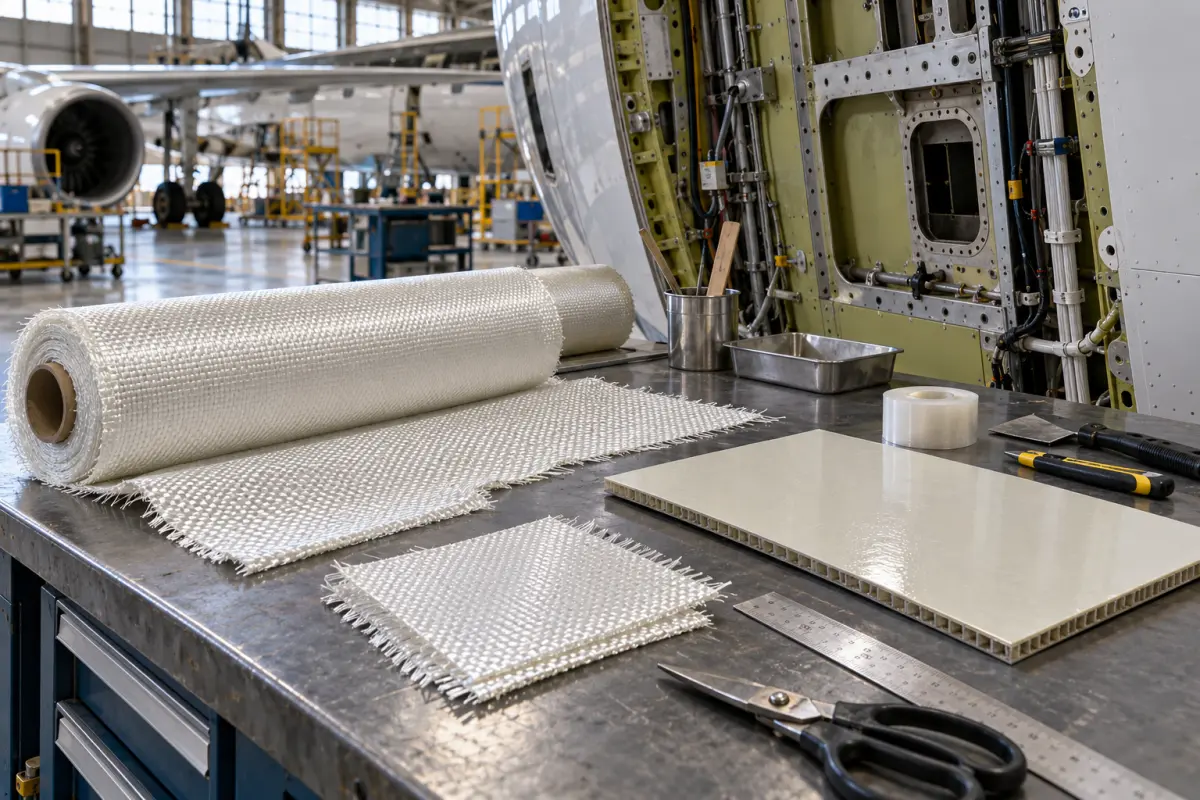
Fiberglass Fabric Composite Repair: MRO Buying Guide
Fiberglass fabric composite repair uses woven glass reinforcement with a compatible resin or bonding system to restore a damaged composite part. For aircraft MRO purchasing, the key question is not simply whether a fabric is fiberglass: its weave, finish, width, material form, and part number must match the documented repair requirements.
Key Takeaways
- Dry fiberglass fabric is reinforcement; it is not a complete repair system without the specified resin or bonding materials.
- Fabric style, weave, finish, width, and part number help distinguish materials that may look similar.
- A coated fiberglass fabric for a cargo liner should not be treated as interchangeable with dry reinforcement fabric.
- The most useful RFQ identifies the aircraft part, repair reference, exact material identifier, required quantity, and documentation needs.
What Fiberglass Fabric Does in a Composite Repair
In a laminated composite, fibers carry much of the load while the cured resin holds the fibers in place, transfers load between them, and gives the laminate its shape. Woven fiberglass fabric is supplied in an organized pattern of lengthwise and crosswise yarns, making it practical to cut and position for a defined ply schedule.
A repair may call for replacing damaged plies, bonding a prepared patch, or restoring a panel surface. Those are different tasks: the required fabric and companion materials depend on the original construction and the documented repair design. A buyer should therefore identify the material from the repair instructions rather than selecting it solely because a product description names a similar aircraft area.
Dry fabric and pre-impregnated reinforcement are also different purchasing forms. Dry fabric requires a separately specified resin system during layup. Prepreg already contains resin and brings additional handling and processing requirements. An adhesive film, by contrast, is used to bond surfaces; it does not replace a woven reinforcement ply merely because both materials appear in composite work.
How to Compare Fiberglass Fabric Options
Start with the exact part number when one is provided. If the request instead names a fabric style or describes an application, resolve the remaining details before ordering. The examples below show why an application description alone is insufficient.
| Material example | Form or distinguishing feature | Listed application context | Buying distinction |
|---|---|---|---|
| BMS9-3-TYH3CL7ST7781/38 | Dry, 8-harness satin weave; Style 7781 | Interior cabin and honeycomb structures | Confirm the complete identifier, not just “Style 7781.” |
| BMS9-3-TYDCL7ST120/38 | HexForce Fiberglass Dry Fabric 120 | Radomes, interior panels, fairings, and other listed structures | Do not infer interchangeability from overlapping applications. |
| TF60-0557100 CARGO-TEX-1 | Woven fiberglass with a polymer coating | Cargo liners and smoke curtains | Do not substitute a coated fabric for a specified dry laminate ply. |
The Style 7781 dry fiberglass fabric listing describes an 8-harness satin weave and use in cabin structures such as seats, luggage bins, bulkheads, lavatories, and wall panels. The Fiberglass Dry Fabric 120 listing names applications that include radomes and interior paneling. These descriptions help buyers find a candidate product; they do not establish that either fabric is suitable for a particular repair.
Check the specified width as well as the style. Width affects whether a ply can be cut to the required shape and fiber orientation without an unintended join. Finish or surface treatment matters because it can affect how the fabric works with the selected resin system. A procurement description should preserve all suffixes and separators in the requested identifier rather than shortening it to a familiar style name.
Keep Reinforcement, Bonding, and Coated Fabrics Distinct
Composite repair bills of material can contain several products that perform different functions. Fiberglass fabric provides reinforcement. Resin impregnates and consolidates dry reinforcement when that is the specified method. Adhesive may bond a patch or other prepared surfaces. Consumables used during processing serve still other purposes; none should be assumed to be included with a roll of dry fabric.
For example, the LOCTITE EA 7000 050NW AERO epoxy film adhesive is described as a film adhesive for composite bonding applications, including composite repair. That product description does not make it a substitute for the resin used to impregnate an unspecified dry fabric. When reviewing a material list, give the adhesive and reinforcement separate line items so their quantities and identifiers cannot be confused.
Similarly, TF60-0557100 CARGO-TEX-1 coated fiberglass fabric is described for applications such as aircraft cargo liners and smoke curtains. Its polymer coating is a meaningful distinction from dry reinforcement fabric. If a request says only “fiberglass cloth for a cargo area,” ask whether it refers to a coated liner material or a laminate repair ply before seeking a substitute.
Turn the Repair Requirement Into an Accurate RFQ
The engineer or planner can help procurement avoid delays by translating the repair requirement into a complete purchasing line. Capture the material identifier exactly as written, then separate confirmed requirements from information that still needs clarification.
- Identification: Manufacturer or brand if specified, full part number, fabric style, and any named finish or treatment.
- Material form: Dry fabric, prepreg, or coated fabric; do not use “fiberglass” as the only form description.
- Dimensions and quantity: Required width, ordering unit, and amount needed for the planned cuts and authorized waste allowance.
- Application reference: Aircraft part or assembly and the applicable repair-document reference, shared as appropriate.
- Receiving needs: Required traceability, labeling, and documentation to be confirmed with the receiving team.
A practical request might read: “Please quote fiberglass fabric PN BMS9-3-TYH3CL7ST7781/38, dry Style 7781, for a documented interior-panel composite repair. State the supplied width and ordering unit, and identify the documentation available with the material.” This preserves the full part number while asking the supplier to clarify purchase details rather than guessing them.
If the maintenance paperwork names only “Style 7781,” procurement should return the request for clarification instead of selecting a similar-looking listing. The same applies when the required finish, width, or material form is absent. Resolving those questions before a purchase order is issued is usually simpler than discovering a mismatch at receiving or during job preparation.
Review the Material Before It Reaches the Work Area
A receiving check should compare the delivered label and accompanying paperwork with the purchase order and the material requirement. Confirm the full identifier, form, width, quantity, and any documentation requested by the organization. Keep the supplier’s product description separate from the engineering basis for using the material: a general list of applications is not a repair authorization.
Airworthiness caution: Use only materials and repair methods permitted by the applicable aircraft maintenance or structural repair documentation and required approvals. Follow the current manufacturer’s data sheet for each material, including its handling and processing instructions; proposed substitutions need review through the organization’s approved engineering process.
Sourcing from CraftJetAero
Buyers can request a quote from CraftJetAero by part number. Include the full identifier, quantity, required material form and width, and any documentation questions so the request can be evaluated against the intended purchase.
Frequently Asked Questions
Is fiberglass fabric the same as a complete composite repair kit?
No. Fabric is the reinforcement; a repair may also require a specified resin or adhesive and separate process consumables. The applicable repair instructions define the complete material set.
Can I select fabric based on the aircraft area named in a product listing?
No. A listed application helps identify a product category, but it does not establish suitability for a specific aircraft part or repair. Match the documented material requirement.
What does “dry” mean in a fiberglass fabric description?
Dry fabric has not been supplied as a resin-impregnated prepreg. Where a repair uses dry fabric, its resin system is identified separately.
Are coated cargo-liner fabric and dry fiberglass reinforcement interchangeable?
No. A polymer-coated fabric intended for a liner has a different material form from dry fabric intended for laminate layup. Confirm which one the repair or replacement requires.
What should I do if my request lists only a fabric style?
Ask for the full specified identifier and confirm the required finish, width, and form before ordering. A style name by itself may not identify every purchasing detail.