
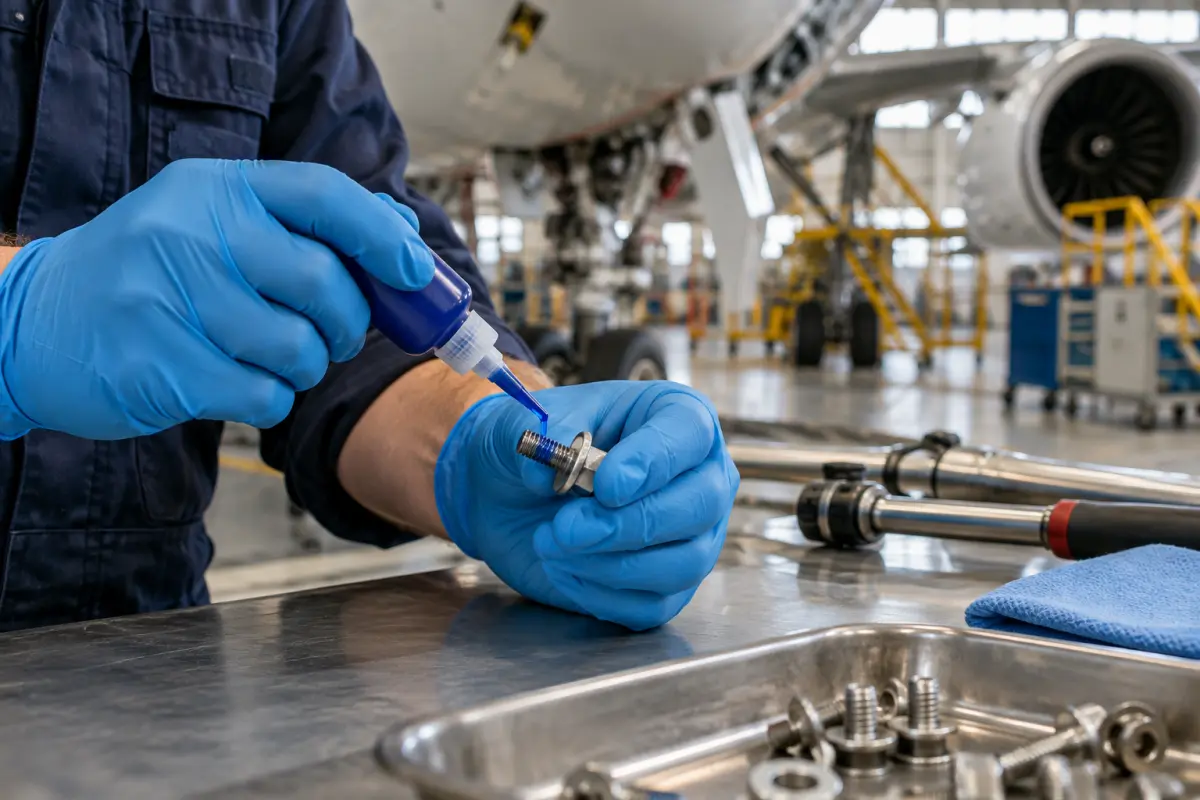
Threadlocker in Aviation: Selection and Sourcing Guide
Threadlocker in aviation is an adhesive used on threaded fasteners to help resist loosening from vibration and shock. Products differ in strength, viscosity, and intended assembly method, so the right choice depends on the fastener, the maintenance task, and whether later disassembly is expected.
Key Takeaways
- Threadlocker helps keep threaded fasteners from loosening; it does not replace the fastener or its specified installation method.
- A low-viscosity wicking product addresses a different assembly need than a product applied before fasteners are joined.
- Low-strength and high-strength threadlockers have different implications for future disassembly.
- Buyers should identify the exact product part number, package requirement, and applicable maintenance reference in a quote request.
What Does Threadlocker Do on an Aircraft?
A threaded joint can be exposed to vibration, shock, and repeated handling during service. Threadlocker is placed at the mating threads to help keep a nut, bolt, screw, or stud from rotating loose. Depending on the product, it may also help seal the threaded interface against leakage.
Threadlocker is one part of a fastening system, not a general-purpose fix for a loose joint. Fastener selection, thread condition, installation procedure, and any specified mechanical locking feature remain separate considerations. For procurement teams, that distinction matters: a request for “adhesive for a bolt” does not establish which threadlocker, if any, the job calls for.
Threadlockers also differ from products bought primarily to seal a larger joint or bond two broad surfaces. Their defining use is at a threaded interface. A buyer comparing adhesive line items should therefore check the intended joint and application method rather than treating every product labeled “adhesive” as interchangeable.
How Do Common Threadlocker Products Differ?
The products below illustrate practical distinctions, not a list of substitutes. In particular, a wicking product, a low-strength product, and a high-strength product can solve different fastening problems even though all are described as threadlockers.
| Product | Characteristics described in the product listing | Selection question |
|---|---|---|
| LOCTITE-932 | Low-strength, fast-curing acrylic threadlocker described for aircraft maintenance and soft metal fasteners. | Is a low-strength product specified where later disassembly is expected? |
| LOCTITE-290 | Low-viscosity, wicking threadlocker described as medium to high strength. | Does the task call for a wicking application at the threaded interface? |
| LOCTITE-243 | Thixotropic threadlocker described as staying in place and working with various materials, including stainless steel. | Are its application behavior and specified materials relevant to the job? |
| LOCTITE 2700 | High-strength anaerobic product described for permanent locking and sealing of metal threaded fasteners. | Is the joint intended to remain assembled rather than be routinely disassembled? |
Strength labels alone cannot establish interchangeability. Even when two listings mention resistance to vibration, the products may differ in how they are applied, the materials they address, and how readily a joint can be taken apart. Match the exact identifier on the maintenance request before evaluating another product.
What Should Engineers and Buyers Check Before Selection?
Start with the joint, not the catalog description. A useful selection record identifies the fastener location, the materials at the threaded interface, whether the fastener is assembled or already installed, and whether future removal is part of normal maintenance. These details help distinguish a request for a wicking threadlocker from one for a product used during assembly.
- Exact identifier: Record the manufacturer and full product part number, including punctuation or spacing shown on the request.
- Service intent: Note whether planned disassembly is expected; this helps frame the strength requirement.
- Application method: Establish whether the product must flow into an assembled threaded interface or be applied as part of assembly.
- Substrate and joint details: Identify the threaded materials and the location so engineering can evaluate product suitability.
- Order details: State the required package size and quantity separately from the chemical’s part number.
Use only the product and process authorized by the applicable aircraft maintenance documentation and engineering instructions. Confirm any required approvals and airworthiness implications before use, and follow the manufacturer’s current technical data sheet for surface preparation, application, curing, and handling; do not treat a catalog description as an installation instruction.
Why Do Application Method and Strength Matter?
Application method affects which product a maintenance team may request. LOCTITE-290 is described as low viscosity with wicking behavior, meaning it is intended to flow into a narrow threaded interface. That characteristic is different from a product selected because it stays where placed during assembly. The difference is operational, not merely a preference for one bottle over another.
Strength affects the expected service path. The listing for LOCTITE-932 describes low strength and easy disassembly, while LOCTITE 2700 is described as high strength for permanent locking where disassembly is not required. Neither description establishes that a product is suitable for every fastener in those broad categories. It does, however, explain why “stronger” is not automatically a better purchasing criterion.
Chemistry is another useful identifier. LOCTITE 2700 is described as anaerobic: it cures when confined without air at metal threaded surfaces. A request that specifies an anaerobic product is more precise than one that says only “thread adhesive,” but the named part number remains the clearest way to communicate the requirement.
How Should an MRO Buyer Write a Threadlocker Request?
A precise request lets a supplier identify the requested item without guessing at the joint design. For example: “Please quote LOCTITE-290 threadlocker, manufacturer Henkel, in the package size and quantity shown on our purchase request. Identify the offered part number and provide the current product documentation for our review.” The buyer would fill in the actual package size and quantity rather than assume them from a product name.
If the request originates from a work card that names LOCTITE-932 instead, preserve that identifier. Do not silently change it to LOCTITE-290 because both are threadlockers: the listed strength and application characteristics differ. If a requested item cannot be matched exactly, route any proposed alternative through the organization’s normal technical review before changing the purchase request.
It also helps to separate the purchasing description from the engineering basis. The purchasing description identifies what to quote; the maintenance reference explains why that item was requested for the particular job. Keeping both available reduces ambiguity when the same maintenance organization buys several threadlocker types.
Sourcing from CraftJetAero
CraftJetAero accepts quote requests by part number. Send the requested threadlocker identifier, package requirement, and quantity through the CraftJetAero contact page so the offered item can be matched to your purchasing request.
Frequently Asked Questions
What is threadlocker in aviation?
It is an adhesive used at a threaded fastener interface to help resist loosening from vibration or shock. The specific product and its application depend on the maintenance task.
Is a wicking threadlocker the same as a standard assembly threadlocker?
No. A wicking product is characterized by its ability to flow into a narrow threaded interface; products used during assembly may have different application behavior. LOCTITE-290 is listed as a low-viscosity wicking threadlocker.
Should buyers choose the highest-strength threadlocker available?
No. Strength should reflect the specified joint and whether future disassembly is expected. A high-strength product and a low-strength product are not interchangeable simply because both help resist loosening.
Does threadlocker replace a lockwire or other mechanical locking feature?
Threadlocker and mechanical locking features work in different ways. One should not be assumed to replace another in an aircraft fastening arrangement.
What information belongs in a threadlocker quote request?
Include the manufacturer, exact product part number, required package size, and quantity. Provide enough context to resolve an identifier question, but keep technical product changes separate from the purchasing request.