
Lacing Tape for Wire Harness: Aircraft MRO Buying Guide
Lacing tape for wire harness is a flexible textile tie used to bind groups of wires and help keep a harness organized along its routed path. In aircraft maintenance, the useful buying question is not simply whether an item is called lacing tape, but whether its exact part number and characteristics match the material identified for the job.
Key Takeaways
- Lacing tape binds wires without the rigid locking head used by a cable tie.
- Material, width, finish, and identification matter when matching an existing harness installation.
- A product listing that says only “lacing tape” does not establish its suitability for a particular aircraft.
- Buyers should request the exact part number and identify any documentation their receiving process requires.
What Lacing Tape Does in a Wire Harness
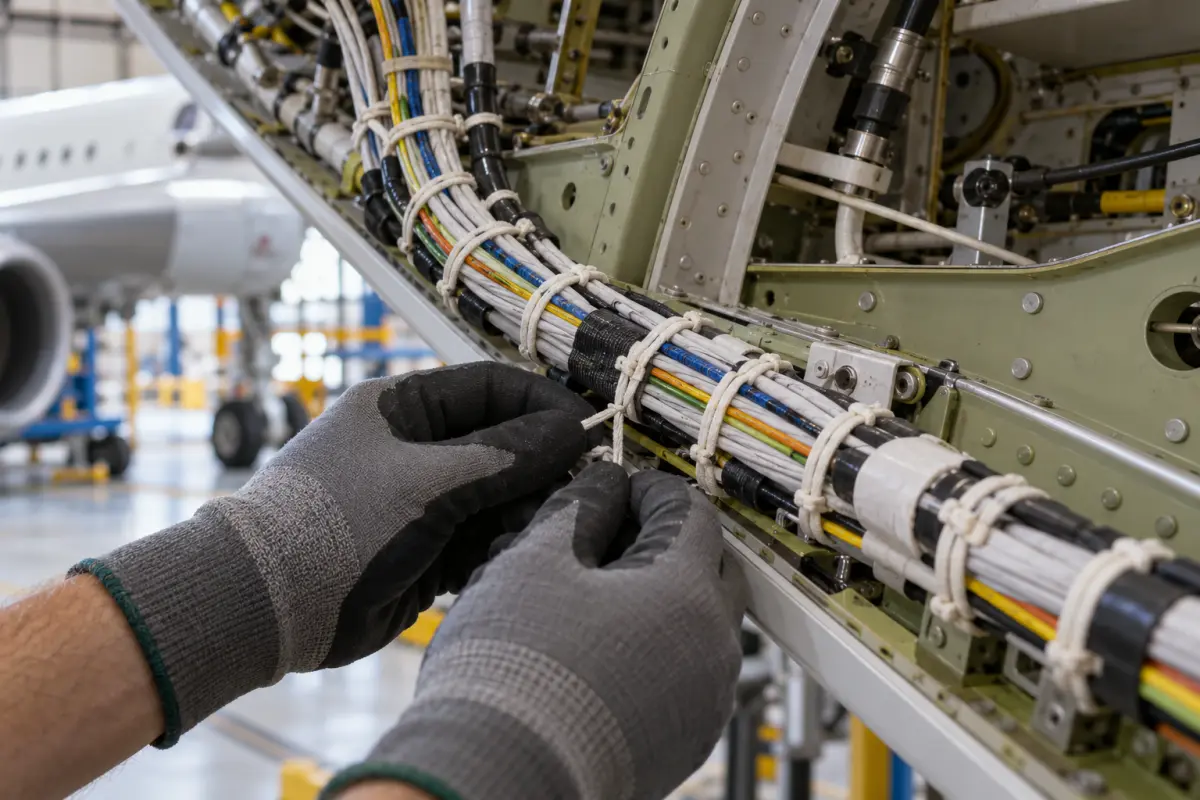
A wire harness groups conductors so they can be routed, identified, supported, and serviced as an assembly. Lacing tape is tied around a wire bundle at selected points to hold that grouping together. Depending on the installation, technicians may use individual ties or a continuous lacing pattern. The tape provides a flexible binding method rather than an adhesive wrap or a molded fastener.
Lacing can be useful where a low-profile tie helps keep a bundle orderly, especially near branches or in spaces where a protruding fastener head would be undesirable. Its job is bundle management; it does not replace the clamps, supports, separation, or protective measures called for elsewhere in a wiring installation. The location and spacing of ties are installation decisions, not properties that can be inferred from a roll of tape.
“Lacing tape” also describes a product family rather than one universal material. Products can differ in textile construction, width, finish, color, and other identifying characteristics. Those differences make an exact item reference more useful than a generic request for aircraft-grade tape.
Lacing Tape, Cable Ties, and Adhesive Tape
All three items can appear in a wiring work area, but they perform different tasks. A buyer should preserve the requested fastening method rather than treating these names as interchangeable.
| Item | How it holds a bundle | Distinguishing feature |
|---|---|---|
| Lacing tape | Textile tape is tied around wires. | Flexible binding with no molded locking head. |
| Cable tie | A strap passes through a locking head. | Fastener dimensions and head position affect the installed profile. |
| Adhesive tape | Adhesive-backed material wraps around or attaches to a surface. | Its bond and intended use differ from a tied textile binding. |
These distinctions help when reviewing a purchase request. If an engineer specifies lacing tape, an adhesive tape with a similar appearance is not automatically an equivalent. Likewise, a cable tie may secure a bundle but introduce a different fastening geometry. For a broader look at related materials, see CraftJetAero’s guide to aerospace tape types and uses.
How to Identify the Right Item for Procurement
Start with the part number in the maintenance bill of materials, drawing, work order, or approved purchasing record. Then compare the supplier’s listing with the requested manufacturer and item description. If the request names only “lacing tape,” return to the requester for an exact identifier rather than selecting by appearance.
- Part number and manufacturer: Record both when available, including any suffixes or revision-related identifiers supplied by the requester.
- Physical description: Check the requested width, color, and finish if those details are part of the material callout.
- Unit of purchase: Clarify the quantity and packaging unit so a roll, spool, or other package description is not mistaken for a length requirement.
- Receiving information: State which manufacturer identification or other documents your organization needs to match the delivered item to the order.
For example, a buyer might write: “Please quote Western Filament Inc part number HOF40RWHTR, lacing tape. Confirm the manufacturer’s part number shown on the quoted item and identify the unit of purchase.” CraftJetAero lists HOF40RWHTR as Western Filament Inc lacing tape. That listing identifies the item; it does not, by itself, establish its fiber type, dimensions, performance characteristics, or aircraft applicability.
If a purchasing record also contains an NSN, keep it alongside the manufacturer’s part number rather than assuming the two identifiers are interchangeable. An NSN identifies a supply item within a cataloging system, while a manufacturer part number identifies an item in that manufacturer’s numbering system. CraftJetAero’s practical guide to NSN numbers explains that distinction in more detail.
What to Check Before Harness Work Begins
Material identification is only one part of preparing a wiring task. A technician also needs to understand the bundle’s route, branch points, nearby structure, access for inspection, and the fastening method shown for the installation. These details determine where a tie belongs and whether the finished bundle remains serviceable.
During planning, distinguish a material substitution from an installation change. Substituting a different tape can change the material used, while replacing lacing with cable ties can also change the installed shape and fastening method. Both questions need review by the responsible technical authority rather than a purchasing decision based on a similar product name.
Use only materials and methods permitted by the applicable aircraft maintenance documentation, and check the manufacturer’s data sheet for the exact item. Confirm required approvals and airworthiness implications through the organization’s authorized process before making substitutions or changing an installation.
Receiving and Traceability Questions
A receiving check should connect what was ordered to what arrived. Compare the package identification and accompanying paperwork with the purchase order, including the manufacturer and complete part number. If the markings are incomplete or differ from the order, resolve the discrepancy before issuing the material to a job.
It is also helpful to keep the supplier’s product description separate from verified technical characteristics. A listing can confirm that an item is sold as lacing tape without answering every engineering question about it. When the work package calls for a particular construction or finish, request the relevant product information rather than filling gaps from a photograph or a similar-looking tape. Buyers can browse aviation consumables to locate related items, then narrow the request to the specified part number.
Sourcing from CraftJetAero
Buyers can request a quote from CraftJetAero by part number. Include the manufacturer, required quantity and unit of purchase, and any documentation needs so the request can be evaluated against the item specified for the job.
Frequently Asked Questions
What is lacing tape for wire harness used for?
It is tied around grouped wires to help keep a harness bundled and organized. It is a binding material, not a substitute for all other wire-support or protection methods.
Is lacing tape the same as a cable tie?
No. Lacing tape is tied textile material; a cable tie is typically a strap secured through a locking head. The specified fastening method matters because the installed forms differ.
Can I choose lacing tape based on color alone?
No. Color does not establish the manufacturer, construction, dimensions, or suitability of an item. Match the complete requested identifier and any required material characteristics.
What does part number HOF40RWHTR identify?
CraftJetAero lists HOF40RWHTR as Western Filament Inc lacing tape. The listing does not provide enough technical detail to infer its dimensions, material composition, or suitability for a particular installation.
What should an MRO buyer include in a quote request?
Include the exact part number, manufacturer when specified, quantity, unit of purchase, and documentation requirements. If the work request says only “lacing tape,” ask the requester to identify the required item before ordering.