
Glass Cloth Tape for Aircraft MRO: Uses and Buying Guide
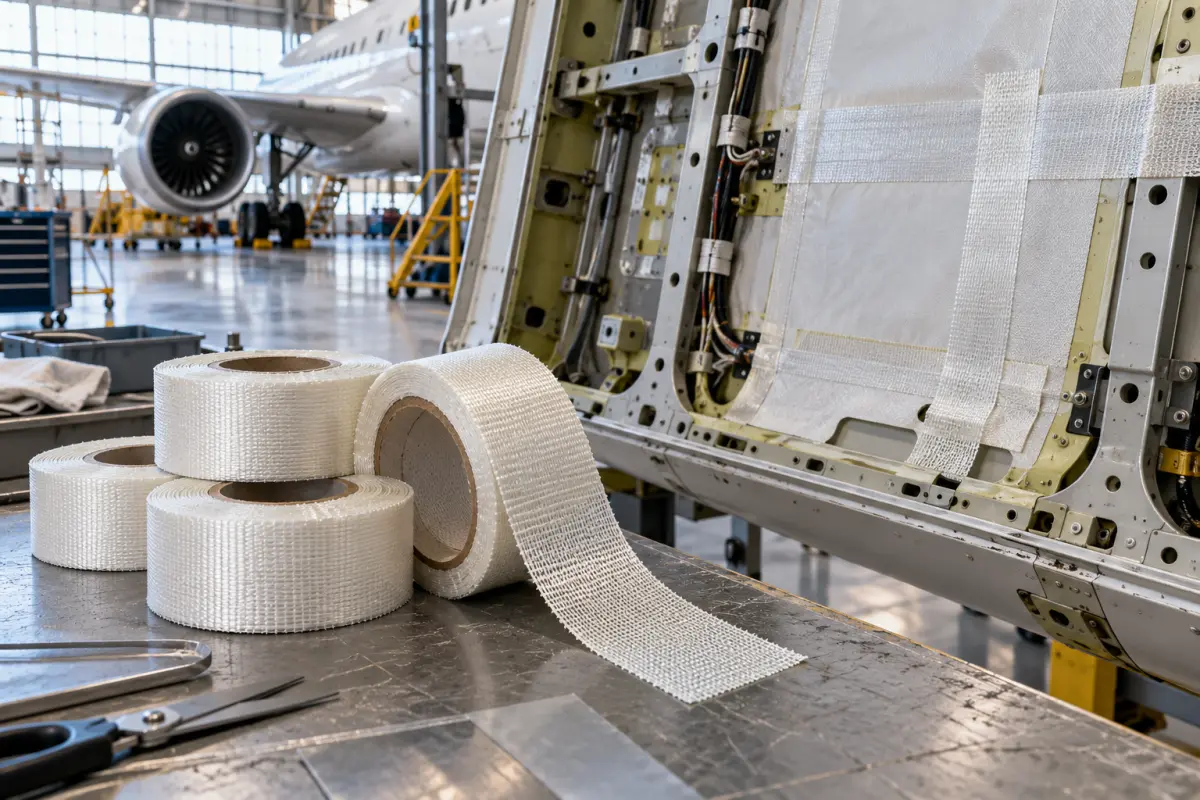
Glass cloth tape is an adhesive tape with a woven glass-fiber backing. In aircraft maintenance, it is used for specified tasks such as sealing insulation blankets, covering seams, and insulating electrical assemblies; the right choice depends on the adhesive, construction, and intended application, not just the words “glass cloth” on the label.
Key Takeaways
- Glass cloth is the backing; the adhesive and product construction determine how a tape behaves in use.
- Flame-retardant, cargo-liner, and electrical-insulation tapes are not interchangeable by description alone.
- A request for quote should identify the exact part number, required width, roll quantity, and intended application.
- A product listing can narrow a search, but it does not establish suitability for a particular aircraft task.
What Glass Cloth Tape Is—and What It Is Not
The woven backing gives glass cloth tape a different construction from plastic-film, paper, or metal-foil tape. Products in this family may be selected where a fabric backing is useful for handling, strength, or conformity to the surface. Their adhesives can differ substantially: the products discussed below include modified acrylic and silicone adhesive constructions.
“Glass cloth tape” describes a material category, not a single maintenance item. Two rolls can share a glass backing yet have different adhesive behavior, colors, liners, and intended uses. For a broader view of where this family sits among other materials, see the aerospace tapes selection guide.
It is also distinct from dry fiberglass fabric used as a material in composite work. An adhesive-backed tape supplied on a roll is not a substitute for fabric, resin, or another material called out for a composite repair.
How Common Product Types Differ
Start with the location and function of the tape. A seam on a cargo liner, a patch on an insulation blanket, and an electrical-insulation task present different selection questions, even if each product is described as glass cloth tape.
| Product | Construction or stated use | Useful purchasing distinction |
|---|---|---|
| 3M 398FR glass cloth tape | Flame-retardant tape described for sealing, splicing, and patching around insulation blankets, panels, and ducts. | Identify 398FR when that specific product is required; do not substitute another flame-retardant tape based on the description alone. |
| Polyken P629 glass cloth tape | Flame-retardant tape with a bright white backing, modified acrylic adhesive, and blue PE liner; described for cargo-liner seam sealing. | Record the required width and liner or color requirements when ordering for visible panel seams. |
| 3M Scotch No. 69 glass cloth tape | Glass cloth tape with silicone adhesive, described for 600-volt dry-location applications in motors and transformers. | Its stated electrical use is different from a cargo-liner seam-sealing use. |
| Holscot HMGC PTFE/glass cloth tape | Self-adhesive PTFE/glass cloth construction with a peel-off backing. | Specify the full construction rather than treating it as an uncoated glass cloth tape. |
These descriptions help a buyer distinguish product families. They do not mean that all four tapes serve the same aircraft location or that one is an automatic alternative to another.
Selection Questions for Maintenance Buyers
A useful first step is to separate the engineering requirement from the purchasing description. “Glass cloth tape” may be enough to begin a catalog search, but it leaves important choices unresolved. Ask the requesting team for the following:
- Exact identification: Is a manufacturer and part number specified, or is the request still at the product-family stage?
- Task and location: Is the tape for an insulation blanket, panel or duct, cargo-liner seam, or electrical assembly?
- Construction: Does the requirement call for a particular backing, adhesive, liner, or color?
- Order configuration: What width, roll length, unit of measure, and quantity does the buyer need?
- Documentation: What product identification and records must accompany the procurement request?
Appearance can be a functional purchasing detail. P629’s bright white backing, for example, is described as matching Tedlar (PVF) cargo-liner panels, while its blue PE liner is a separate handling feature. Neither detail should be inferred for a different glass cloth tape.
Maintenance caution: Confirm any required approvals and the exact application against the aircraft maintenance documentation, then follow the tape manufacturer’s current data sheet and application instructions. A catalog description alone cannot establish airworthiness or authorize a substitution.
A Practical Request-for-Quote Example
Suppose a maintenance planner identifies P629 for a cargo-liner seam task. Instead of sending “quote white glass tape,” the buyer could write: “Please quote Polyken P629 glass cloth tape for a cargo-liner seam application. Required width: [specified width]; roll length: [specified length]; quantity: [specified quantity]. Please identify the manufacturer and part number on the quote.” The bracketed fields should be filled from the actual work package or purchasing requirement, not guessed from a product description.
If the request instead specifies 3M 398FR for insulation-blanket work, retain that identifier in the inquiry. A search result showing another flame-retardant glass cloth tape is a lead for review, not a reason to silently change the requested item. Likewise, a request for Scotch No. 69 should preserve its electrical-use context rather than reducing it to “high-temperature tape.”
Part numbers matter because short descriptions can conceal material differences. Width and roll configuration matter because receiving the correct product family in the wrong format can still leave the maintenance team without the item it requested. Clear identification also helps procurement and engineering discuss a proposed alternative without confusing it with the original requirement.
Receiving and Handling Details Worth Checking
When the material arrives, compare its label and packaging with the purchase order before it enters a maintenance kit. Check the manufacturer and part number, the supplied width and quantity, and any product records requested by your organization. Where a tape has a release liner, keep that distinction in the item description so it is not confused with an otherwise similar unlined roll.
Keep the tape identified during storage and issue. A roll removed from its outer packaging can be difficult to distinguish from another white or light-colored tape by sight alone. Preserving the product identifier through the handoff from stores to the work area makes it easier to match the issued material to the original request.
Sourcing from CraftJetAero
Buyers can request a quote from CraftJetAero by part number. Include the required width, quantity, and application context so the inquiry identifies the intended glass cloth tape clearly.
Frequently Asked Questions
What is glass cloth tape used for on aircraft?
Uses described for the products here include insulation-blanket sealing and patching, cargo-liner seam sealing, and certain electrical-insulation applications. The specific product and task must be identified together.
Is every glass cloth tape flame-retardant?
No. Do not infer a flame-retardant property from the backing alone; verify the claim for the exact product. The source descriptions identify 398FR and P629 as flame-retardant products.
What is the difference between P629 and Scotch No. 69?
P629 is described as a white, modified-acrylic-adhesive glass cloth tape for cargo-liner seams. Scotch No. 69 has a silicone adhesive and is described for dry-location electrical applications in motors and transformers.
Is PTFE/glass cloth tape the same as ordinary glass cloth tape?
No. A PTFE/glass cloth construction, such as HMGC, should be identified separately from a product described simply as glass cloth tape. Its full construction is relevant to purchasing and material identification.
What should I include when requesting a quote?
Provide the manufacturer and part number if known, plus the required width, roll length, quantity, and intended application. These details reduce ambiguity between tapes with similar general descriptions.