
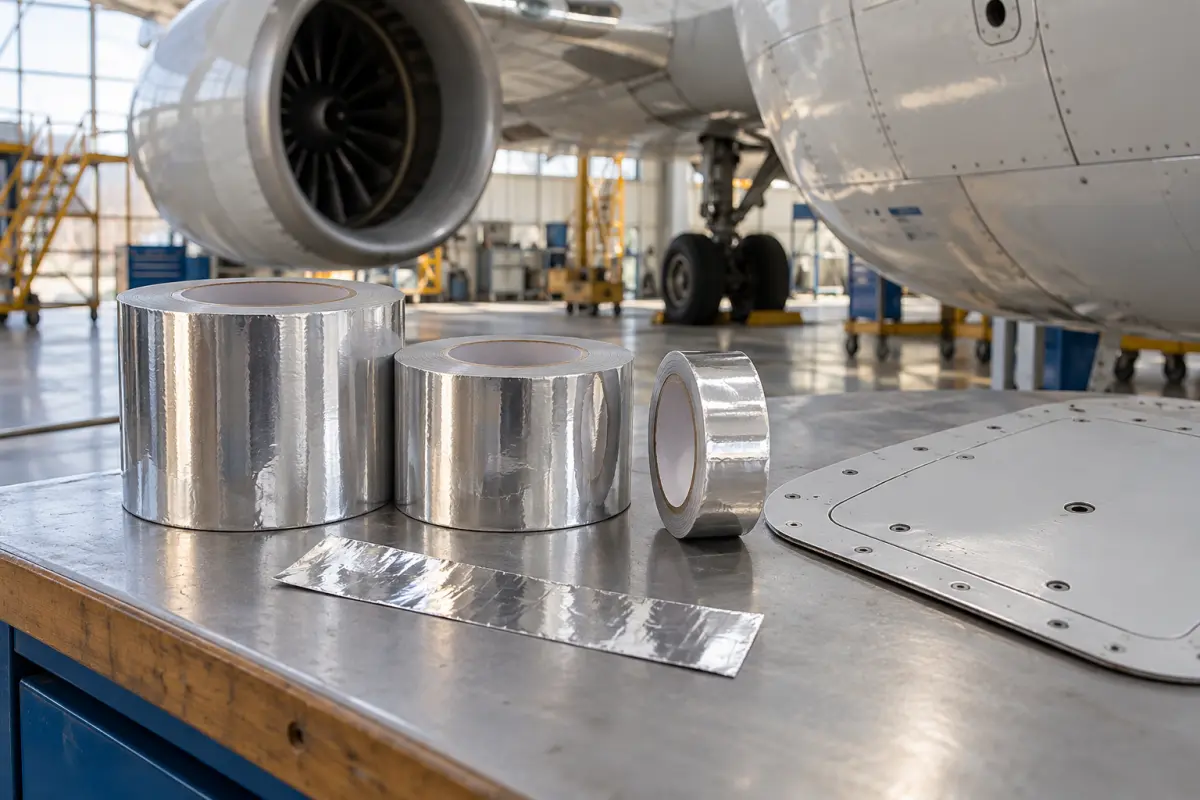
Aluminum Foil Tape Aircraft: Uses and MRO Buying Guide
Aluminum foil tape for aircraft maintenance is a foil-backed adhesive tape used for tasks such as sealing, masking, surface protection, and heat reflection where the specified application permits it. The right choice depends on the job: a general foil tape, a solvent-resistant sealing tape, and a viscoelastic vibration-damping tape are not interchangeable simply because each has an aluminum backing.
Key Takeaways
- Match aluminum foil tape to the task, substrate, exposure, and required product identification.
- Foil backing alone does not make a tape suitable for vibration damping or structural bonding.
- Record the manufacturer, part number, roll width, quantity, and intended use in a purchase request.
- Check whether the request calls for sealing, masking, surface protection, or vibration reduction before comparing products.
What Aluminum Foil Tape Does in Aircraft Maintenance
Aluminum foil tape combines a thin metal backing with an adhesive layer. The foil can provide a conformable, reflective surface and a physical covering over an edge or joint; the adhesive holds that backing against the surface. Those characteristics make foil tape useful for several maintenance and shop tasks, but the adhesive and backing construction determine how a particular product behaves.
For example, a maintenance team might need tape to mask an area during a permitted process, protect a surface, or seal a specified joint. Another team might be investigating vibration-related noise and need a tape designed to dissipate vibration energy. Describing both requirements as “foil tape” hides the distinction that matters most to the buyer.
Aircraft buyers should also distinguish a temporary process material from a material intended to remain on the aircraft. The intended location, service environment, and whether the tape will be removed affect what information belongs in the request. A roll suitable for shop masking should not be assumed suitable for an installed sealing application.
How Common Foil Tape Types Differ
The products below illustrate why an application description is more useful than the phrase “aluminum tape.” These are product descriptions, not a list of substitutes for one another.
| Product | Described construction or characteristic | Reason a buyer might specify it |
|---|---|---|
| 3M 425 | Aluminum foil tape described for sealing and masking | A request identifies this part number for a general foil-tape task |
| 3M 427 | Aluminum foil tape with a transparent acrylic adhesive; listed as a 50-mm roll | The request calls for that adhesive construction and roll format |
| 3M 438 | Heavy-duty aluminum foil tape with a reflective foil backing | The request specifically identifies a heavy-duty foil tape |
| Polyken P11 | Solvent-resistant aluminum foil tape with an acrylic adhesive; described as a 2-inch tape | Solvent resistance is part of the stated product requirement |
| 3M 436 | Aluminum foil vibration-damping tape with a pressure-sensitive viscoelastic polymer | The task is vibration damping rather than conventional sealing |
The contrast between 3M 436 vibration-damping tape and 3M 438 heavy-duty aluminum foil tape is particularly useful: both have foil, but their stated purposes differ. Likewise, Polyken P11 solvent-resistant foil tape communicates a different requirement from an unspecified sealing tape. A treated foil product, BMS8-289-FORM1-GRB, is described for subsequent bonding to other substrates or bonding during fabrication of reinforced thermoset plastic articles; that is a distinct purchasing description, not a generic substitute for an adhesive-backed roll.
How to Specify the Right Tape
Start with the maintenance task, then work outward to the product identity. “Aluminum foil tape aircraft” is a useful search term, but it is too broad for a purchase order if the work package identifies a particular material. Capture these details before requesting a quote:
- Application: State whether the tape is for masking, sealing, surface protection, heat reflection, vibration damping, or a defined fabrication step.
- Product identity: Provide the manufacturer and exact part number when known. Preserve any suffixes, form designations, or other characters shown in the requirement.
- Format: Specify the required width, roll format, and quantity. Do not assume that the same part number is offered only in one width.
- Contact surface and exposure: Describe the substrate and relevant conditions, such as exposure to cleaning solvents, if they are material to selection.
- Documentation: State what product identification or accompanying documentation your purchasing process requires.
For a straightforward sealing or masking request, 3M 427 aluminum foil tape is one product a buyer could identify by part number and listed roll width. A vibration-control request should instead say that vibration damping is the objective; a supplier cannot reliably infer that from “foil tape.” For a broader view of tape families, see the aerospace tapes selection guide.
For aircraft use, confirm required approvals and airworthiness applicability against the aircraft maintenance documentation, and follow the tape manufacturer’s data sheet for surface preparation, application, and limitations. A product description or similar appearance does not establish authorization for a specific installation.
Practical Handling and Application Questions
Even when the part number is settled, application details can determine whether the order meets the work requirement. The team using the tape needs enough width to cover the intended area and enough access to position the foil without unwanted folds. A clean, prepared contact surface matters because an adhesive bonds to the surface it touches—not to an underlying surface hidden by debris or residue.
Think through removal as well as application. Masking tape may need to come off after a process, while a specified sealing tape may be intended to remain in place. Those uses call for different questions about placement, edge coverage, and inspection. If the work concerns a seam, record the seam location and required coverage rather than asking for an unspecified “wide roll.” If it concerns a shaped panel, note whether the tape must conform around contours.
Foil tape should also be kept distinct from liquid sealants and structural adhesives in a bill of materials. All three may appear in the same maintenance project, but they are different material categories. Replacing one with another changes the material being applied and should not be treated as a purchasing shortcut.
Example: Turn a Vague Request into a Usable RFQ
A request reading “Need aluminum foil tape for an aircraft” leaves the supplier to guess the function, product, and roll size. A more useful request identifies what the buyer already knows and clearly labels what still needs confirmation.
Example RFQ: “Please quote 3M part number 427 aluminum foil tape, 50-mm roll, quantity as listed on our purchase request. Intended task: masking and sealing in the identified maintenance work package. Please confirm the quoted manufacturer, part number, and roll format, and identify the product documentation available with the order.”
If the requirement instead concerns vibration-related noise, replace that product identification with the specified vibration-damping tape and describe the location and task. If the team needs a solvent-resistant foil tape, state that requirement and provide the specified part number, such as P11 when it is the requested product. This approach lets procurement compare responses against the actual requirement rather than against a broad material name.
When a part number is unavailable, send the maintenance team’s application description, required width, substrate, and relevant exposure information to the person responsible for material selection before placing an order. The purpose is to resolve ambiguity early, not to ask a supplier to determine what an aircraft installation requires.
Sourcing from CraftJetAero
CraftJetAero lists aluminum foil tapes and other aviation consumables. Buyers can request a quote from CraftJetAero by part number; include the manufacturer, required roll format, quantity, and any purchasing documentation requirements in the inquiry.
Frequently Asked Questions
What is aluminum foil tape used for on aircraft?
Depending on the specified product and task, it may be used for sealing, masking, surface protection, or heat reflection. A specialized foil-backed tape may instead be selected for vibration damping.
Is aluminum foil tape the same as vibration-damping tape?
No. Vibration-damping tape is a specific construction: 3M 436, for example, pairs an aluminum foil backing with a pressure-sensitive viscoelastic polymer intended to absorb and dissipate vibration. A general foil tape should not be assumed to provide the same function.
Does foil tape replace aircraft sealant?
Not as a general rule. Tape and liquid sealant are different material types, and the correct choice depends on the defined maintenance task and specified material.
What details should I include when buying aircraft foil tape?
Provide the manufacturer and exact part number if known, plus the required width, roll format, quantity, and intended task. Include any documentation requirements used by your purchasing process.
Why does roll width matter?
Width determines how much area a strip covers and can affect whether it fits a narrow edge or spans a wider joint. State the required width rather than assuming that a product name identifies a single roll format.