
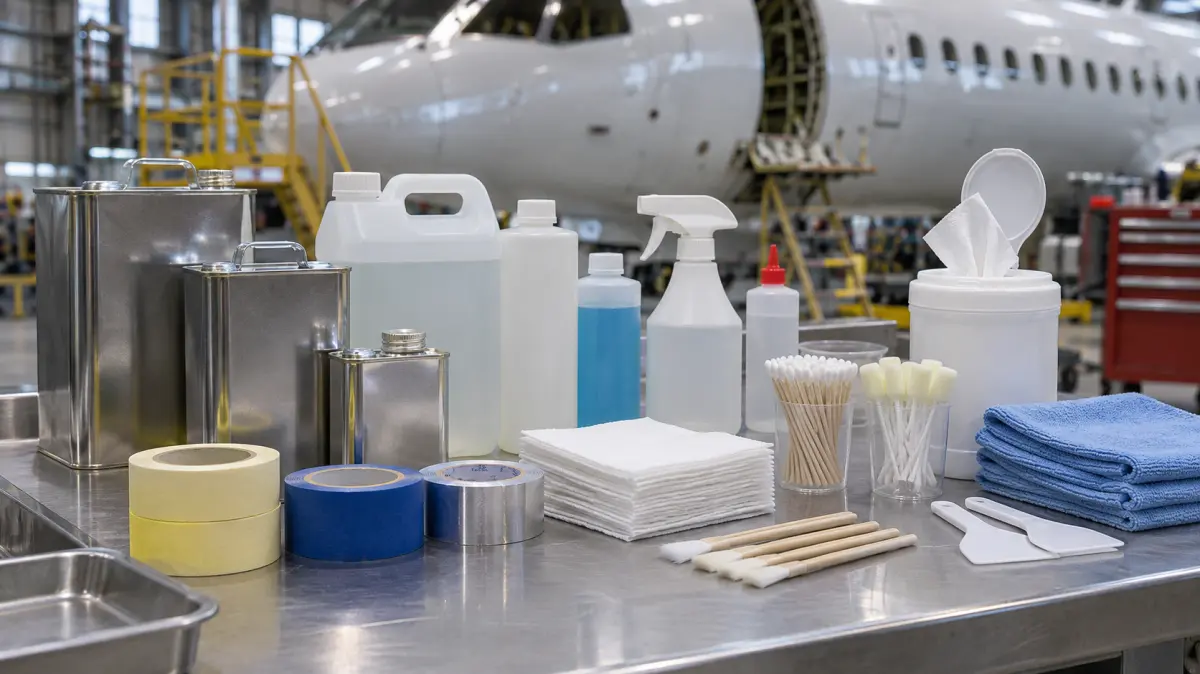
Aircraft Consumables List: Categories and MRO Buying Tips
An aircraft consumables list is a task-based inventory of materials used, applied, replenished, or discarded during aircraft maintenance. It commonly includes sealants, adhesives, cleaners, lubricants, fluids, tapes, surface-preparation materials, and shop supplies; some operators also track installed single-use hardware alongside consumables. The useful list is not a universal catalog—it is one matched to the aircraft, maintenance task, and purchasing requirements.
Key Takeaways
- Build the list from maintenance tasks, not broad product categories alone.
- Record the exact part number and variant when the maintenance requirement identifies one.
- Separate materials applied to the aircraft from supplies used only in the shop.
- For shelf-life-controlled materials, request the dates and documentation needed for receiving.
- Treat installed hardware and aircraft components as separate purchasing lines, even when they appear on the same work package.
Aircraft Consumables List by Category
The table is a starting point for planning, not an authorization to use any material on a particular aircraft. A single work package may call for items from several rows, and the same broad category can contain products with different intended uses.
| Category | Typical items to list | Purchase detail to capture |
|---|---|---|
| Sealing and bonding | Sealants, adhesives, adhesion promoters, and application supplies | Part number, variant, package format, required quantity, and associated application supplies |
| Cleaning and surface preparation | Cleaners, solvents, wipes, and abrasive supplies | Intended task, material identifier, package size, and any required documentation |
| Coatings and corrosion protection | Primers, topcoats, corrosion-prevention materials, and related preparation products | Specified product and variant, color where applicable, package format, and batch documentation needs |
| Lubrication and servicing | Greases, oils, hydraulic fluids, and other replenishment materials | Exact material identifier, container size, and estimated service quantity |
| Tapes and protective materials | Masking, protective, foil, and wire-harness tapes | Material identifier, width, roll format, and intended use |
| Shop supplies | Wipes, mixing supplies, brushes, and disposable protective materials | Quantity, size, packaging, and whether the item contacts the aircraft surface |
Browse aviation chemicals and aviation consumables as separate sourcing categories. Keeping those groups distinct can make a purchasing list easier to review, even when one maintenance job needs both.
Build the List Around the Maintenance Task
Start with the planned work, then list every material needed to prepare, perform, and close out the task. For a sealing job, the primary sealant may be only one line: the work may also need cleaning materials, surface-preparation products, masking tape, mixing or application supplies, and cleanup materials. For a coating job, consider preparation, masking, primer, topcoat, and cleanup as separate purchasing stages.
- Identify the work package. Record the aircraft or component context and the maintenance task so buyers can distinguish similar requests.
- Extract required materials. Capture each specified identifier and its role rather than replacing it with a generic description such as aircraft sealant.
- Add supporting supplies. Include task-specific tapes, wipes, applicators, and protective materials that the team will actually use.
- Estimate usable quantity. Account for the planned job scope and the package formats your team can use without assuming that a larger pack is automatically preferable.
- Assign a buyer or technical reviewer. Flag incomplete identifiers and proposed alternatives for resolution before ordering.
For example, an unhelpful request reads, “Need sealant and tape for a repair.” A more actionable request identifies the sealant part number and variant from the work package, the quantity and package format requested, the tape identifier and width, the required documentation, and the job reference. If the team is still determining which sealant family the task calls for, the guide to aircraft sealant types and uses provides category-level context; it does not replace the task’s material requirement.
Capture Identifiers That Prevent Ordering Errors
A useful aircraft consumables list has one line per distinct item and variant. A product family name alone may not distinguish package formats, colors, forms, or other ordering differences. Keep the original identifier visible when transferring a maintenance requirement into a requisition; do not shorten it to an informal shop name.
- Required item: The exact part number or material identifier, including any suffixes shown in the requirement.
- Description: A plain-language name that helps receiving staff recognize the item without replacing its identifier.
- Form and package: Cartridge, kit, aerosol, bottle, roll, or another requested format, when relevant.
- Quantity and unit: State whether the requirement is for individual containers, kits, rolls, or another unit.
- Documentation: Record the documents your organization needs for acceptance and traceability.
- Work reference: Link the line to the task or internal requisition so technical questions reach the right reviewer.
Keep alternates on a separate review line rather than silently replacing the requested item. That distinction helps buyers request availability for the specified identifier while allowing engineering or the responsible maintenance organization to evaluate any proposed change.
Plan for Receiving, Storage, and Shelf Life
Purchasing does not end when the material is ordered. Before requesting a quote, decide what receiving must verify: identifier and variant, package condition, quantity, labeling, and the documents required by your organization. For controlled materials, record the date information needed to assess usable life on receipt and during planned use. The aerospace chemical shelf-life buying guide explains why date checks belong in the sourcing process.
Consider how the material will be stored and issued. A list for a single repair may favor the quantity needed for that job, while a recurring-maintenance list may include an internal reorder trigger. Keep those planning decisions separate from product identity: a reorder threshold can change without changing the material specified for the task.
Some liquids, aerosols, and other chemical products may also require special handling or shipping arrangements. Flag those items early so the buyer can request the information needed for the purchase and the receiving team can prepare for the delivery.
Separate Consumables, Hardware, and Components
Organizations do not always use the word consumable in the same way. In a narrow sense, it describes materials used up during maintenance, such as a cleaner or sealant. A broader shop list may also include disposable supplies and single-use installed hardware. Clear purchasing categories matter more than forcing every line into one definition.
Use separate lines for installed fasteners and other hardware so their identifiers and quantities are not buried among chemical supplies. Likewise, an aircraft component being replaced is a distinct purchasing requirement, even if the work package also calls for consumables to install or service it. This separation gives buyers a clearer request and helps receiving route items to the appropriate checks.
Caution: Confirm material selection, substitutions, approvals, and airworthiness requirements against the applicable aircraft maintenance documentation; follow the manufacturer’s product data sheet for preparation, application, handling, and storage.
Sourcing from CraftJetAero
Buyers can request a quote from CraftJetAero by part number. Include the complete identifier, requested quantity and package format, and any documentation requirements so the inquiry can be reviewed against the intended purchase.
Frequently Asked Questions
What belongs on an aircraft consumables list?
Include the materials and disposable supplies required for the planned maintenance tasks, such as cleaners, sealants, lubricants, fluids, tapes, and wipes. List installed hardware separately when it is part of the same work package.
Are aircraft fasteners considered consumables?
That depends on an organization’s inventory categories. Fasteners may appear on a broad maintenance supply list, but they should have their own purchasing lines with exact identifiers and quantities.
Is a part number necessary when requesting a quote?
A complete part number or material identifier is the clearest starting point when one is specified. Add the variant, package format, quantity, and documentation needs to reduce follow-up questions.
Should shelf life appear on the list?
For shelf-life-controlled materials, the list should state what date information and remaining usable life your organization needs to verify at receiving. Avoid assuming that every item in a broad product category has the same date requirements.
Can one generic list cover every aircraft?
No. A category checklist helps with planning, but the final item list must reflect the aircraft, maintenance task, and applicable material requirements.