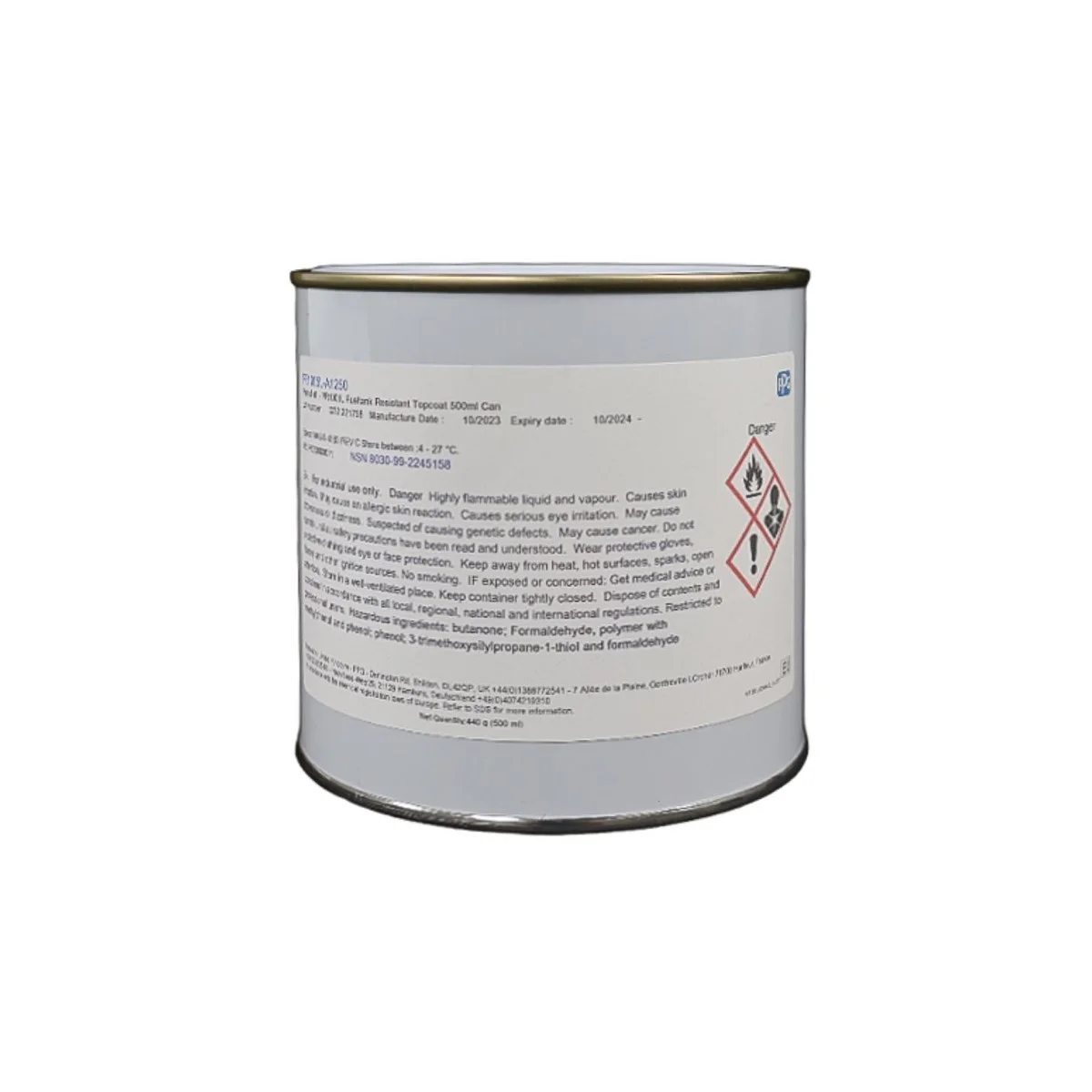
AkzoNobel 454-4-1/CA-109 is the trusted epoxy coating for aviation engineers and MRO teams worldwide, providing long-lasting corrosion protection for aircraft fuel tanks and other critical internal surfaces. From advanced military jets to commercial airliners carrying millions of passengers, ground crews rely on it to resist hydraulic fluids, fuels and engine oils while maintaining structural integrity.
Its OEM-approved formulation, including Boeing BMS 10-20 Type II Class A Grade A compliance, ensures reliable, repeatable performance across multiple aircraft platforms. When aircraft safety, fuel system integrity and rapid AOG readiness matter most, MRO teams choose AkzoNobel 454-4-1/CA-109.
Introducing 3M Scotch-Weld Epoxy Adhesive EC-3333 B/A: a two-component adhesive designed for robust bonding in challenging environments.
With high shear and peel strength, it ensures durability and integrity. Easy mixing and controlled flow make application precise. Ideal for aerospace, automotive, and construction, it excels in bonding metal and plastic components, offering unmatched reliability.
Introducing Hardener HY 994 (400-Gram-Tin): the ultimate companion for composite fabrication. Paired with Araldite AW 136 resin,
it creates a robust laminating system, perfect for ski, snowboard, and composite part production. With superior adhesion and impressive strength, it withstands environmental challenges, making it ideal for various applications from winter sports to crafting composite parts.
Introducing Epibond 420-A/B, a high-performance epoxy adhesive tailored for structural bonding needs. With its room-temperature cure paste formula,
it ensures robust bonds without special conditions. Engineered to aerospace standards, it's versatile, strong, and ideal for diverse materials. Trust Epibond 420-A/B for aerospace-grade reliability in composite panel bonding, repairs, and assembly.
Aircraft engineers and MRO teams working on everything from the most advanced military aircraft to passenger airlines carrying millions of people each year rely on PPG 04349000‑GPRA because it delivers proven corrosion protection. This chromated wash primer is trusted across the aviation industry for its superior resistance to filiform corrosion, ambient curing properties and long 10‑year shelf life. Ground crew keep PPG 04349000‑GPRA in stock because in AOG situations, having the right primer ready ensures aircraft exteriors can be protected and returned to service quickly. When safety, compliance and durability are critical, this primer is the industry’s go‑to choice for maintaining fleet integrity.
Introducing the Indestructible Paint OMAT4-72/RB211 (1-Kit), revolutionizing aircraft maintenance with a swift 14-stage on-wing process. Designed for precise application of PL470 lubricant to fan blade roots,
it ensures peak performance without engine removal. Ideal for airlines and maintenance teams seeking efficient, cost-effective solutions to minimize downtime and maximize aircraft availability.
Introducing Sylgard-170-A/B (2-KG-KIT): A versatile encapsulant solution for the aircraft industry. With a 1:1 mix ratio and low viscosity, it offers easy application.
Its rapid cure and flame resistance make it ideal for critical aircraft components. Ensure longevity and safety with this reliable choice.
Introducing the 3M VHB-4930P, a groundbreaking bonding tape that replaces traditional fasteners with a reliable, high-performance solution.
Its invisible bonding enhances aesthetics, while exceptional durability withstands harsh conditions. Perfect for diverse applications, from architectural projects to automotive assembly, it sets a new standard in bonding technology.
Microspheres BJO-0930 are typically hollow spherical particles, often made from glass or ceramic, designed for use as fillers in aerospace materials. When added to sealants, adhesives, or potting compounds, they lower the overall density, contribute to controlled flow properties, and reduce stresses due to differential thermal expansion.
In MRO and manufacturing of aircraft structures, such microspheres help in tailoring material properties to minimise added weight while maintaining functionality, especially in non-structural applications or where weight is critical.